|
|
Laureates
About Winners
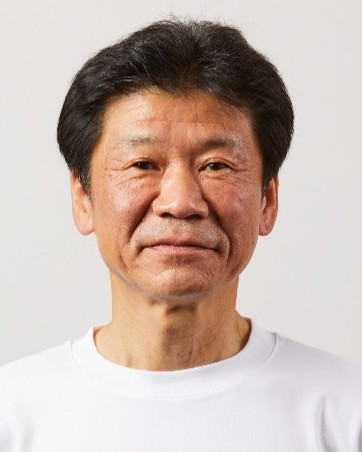
Grand Prix : Mr. ANDO Koki
(The prize will be awarded to an individual/organization whose research and activities are highly evaluated globally and significantly contribute to the problem solving and development of food in the world.)
Chairman,Japan Association for the World Food Programme (JAWFP)
President, Chief Executive Officer, NISSIN FOODS HOLDINGS CO., LTD.
Expanded private-sector support for the United Nations World Food Programme (WFP) by increasing donations and broadening public engagement in its humanitarian activities.
Through the promotion of diverse food assistance initiatives, including emergency relief in response to conflicts and natural disasters, made a significant contribution to addressing global hunger and poverty.
【Main Activities and Research】
Organized emergency fundraising campaigns to support countries and regions facing hardship due to conflicts and natural disasters, and have led donation efforts for Ukraine, Syria, Myanmar, Sudan, and the others.
In addition, is working to raise widespread awareness in Japan of the World Food Programme (WFP), which promotes multifaceted food assistance efforts — such as providing school meals and cash assistance to help beneficiaries rebuild their lives over the medium to long term —, and is committed to building the foundation for expanding the circle of private donations and support in Japan.

Sano Touzaburo Special Prize : Mr. Tristram Stuart
(The prize will be awarded to an individual/organization whose research and international (whether global or regional) cooperation or assistance efforts have resulted in significant achievements.)
co-founder, environmental charity Feedback (now Foodrise)
Founder, Toast Brewing

Exposed the reality of food waste, raising global awareness of the issue and influencing the development of the United Nations Sustainable Development Goals (SDGs).
Recognized as a pioneer in the fight against food waste for outstanding contributions to this global movement.
【Main Activities and Research】
Tristram Stuart’s books, The Bloodless Revolution, and Waste: Uncovering the Global Food Scandal, elevated a global conversation on two major topics: the waste of one third of all the world’s food, and the unsustainable inefficiency of animal agriculture.
His books were reviewed widely as “a genuinely revelatory contribution to the history of human ideas” (The Times). His public campaigning on the issue of food waste, notably the “Feeding the 5000” events in which that many people were fed for free using good food that otherwise would have been wasted in dozens of cities across the world, engaged the hearts and minds of the public, driving change in government policy, corporate practice and measurable mass behaviour change.
As co-founder of the environmental campaign charity, Feedback (now Foodrise), Tristram and his team catalysed a thriving global movement comprising entrepreneurs, NGOs and grassroots organisations determined to convert the global food waste scandal into delicious, nutritious solutions. Tristram went on to launch Toast Brewing which upcycles unsold bread into craft beer and pours its profits into charities.
He is also founder of www.BeWilder.farm which has reintroduced native cattle into wild landscapes where biodiversity is the primary beneficiary, and beef a by-product. He is also co-founder of the Friends of the River Medway (www.formedway.org) which is at the forefront of the campaign to recognise the rights of rivers in the UK and beyond.
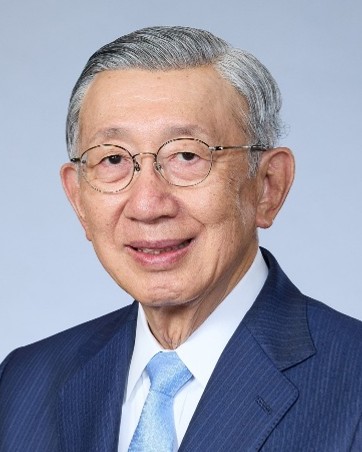
The 21st Century hope Prize : Dr. KINOSHITA Masato
(The prize will be awarded to an individual/organization whose research and practical activities have the potential and feasibility for contributing on a global scale and are extremely likely to develop and produce positive results in the future.)
Graduate School of Agriculture, Division of Applied Biosciences, Associate Professor, Kyoto University
A world-leading pioneer who first successfully applied genome-editing technology to aquaculture, achieving the commercial production of species such as red sea bream and tiger pufferfish.
This groundbreaking research is expected to make significant contributions to addressing global food security challenges and advancing the SDGs in the field of environmental sustainability.
【Main Activities and Research】
To analyze fish gene functions and develop genetic modification in fish, I used medaka (small fin fish) as research model.
In recent years, I have applied the knowledge and techniques gained from medaka research to species such as red sea bream and Japanese flounder, aiming to develop technologies for the rapid selective breeding of farmed fish. Additionally, I engage in outreach activities for the general public to raise awareness about genome editing — a technology that accelerates the selective breeding process.
Prize for Bright Future of Niigata : Mr. MATSUMOTO Masafumi
(The prize will be awarded to activities and research conducted within Niigata Prefecture that are highly acclaimed both domestically and internationally, and that make a significant contribution to regional revitalization and development.)
Founder and CEO, Nosui Shoten Co., Ltd
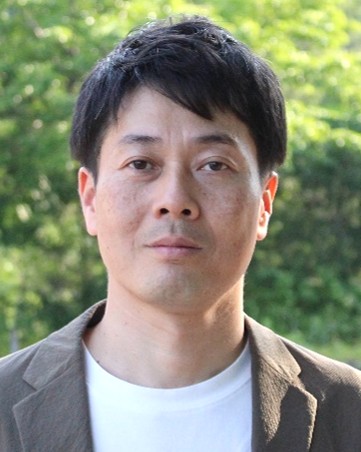
While serving as a high school teacher, he collaborated with his students to develop and commercialize "Saigo no Itteki" (The Last Drop), a fish sauce made from salmon with little commercial value, transforming an underutilized resource into a valuable product.
Following his retirement, he established a company, dedicated its profits to education, and founded a support school for correspondence high school students that pioneered a novel approach to learning by integrating workplace training with formal education.
【Main Activities and Research】
While teaching at Niigata Prefectural Kaiyo Senior High School, Masafumi Matsumoto worked together with students to develop the salmon soy sauce "Saigo-no-Itteki," establishing a hands-on system of vocational education.
After retiring from teaching, he founded a fish sauce manufacturing company and also became the head of an inland water fisheries cooperative association engaged in salmon propagation, contributing to regional revitalization and vocational education built around salmon resources.
To further expand the scope of vocational education, he also operates a wide-area correspondence high school support school (a nationwide school supporting correspondence-course students with its own original curriculum), which was the first in Japan to introduce a full-fledged dual education system.
|